




Southeast Asia – Items
Manuscript, Java, 19th century, Naskhī
-
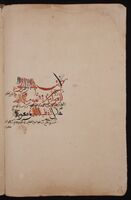
-
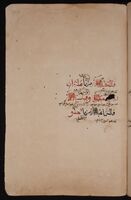
Cite
APA
Ali Akbar, ., & Annabel Teh Gallop, . (n.d.). Manuscript, Java, 19th century, Naskhī (1–), CallFront, accessed October 24, 2026, https://callfront.inha.fr/s/callfront/item/4157
Chicago
Ali Akbar, and Annabel Teh Gallop. n.d. “Manuscript, Java, 19th century, Naskhī.”, CallFront, accessed October 24, 2026, https://callfront.inha.fr/s/callfront/item/4157
MLA
Ali Akbar, and Annabel Teh Gallop. Manuscript, Java, 19th Century, Naskhī, CallFront, accessed October 24, 2026, https://callfront.inha.fr/s/callfront/item/4157
Item descriptor
- Copyrights Holder
- CallFront
- License
- CC BY-SA 4.0
- Entry ID
- SoutheastAsia_AA_ATG_13
- Date
- 19th century
- Localization Exactitude Degree
- Approximate
- Place of Production
- Indonesia, Java island
- Present Location
- Pondok Pesantren Tarbiyya al-Talabah, Keranji, East Java, Indonesia
- Website Link
- See the digitized manuscript
- Language
- Arabic
- Type of text
- Grammar
- Text Content
- Matan al-`Awāmil al-Jurjānī
- Script
- Naskhī/naskh
- Remarks (General Identification)
- Manuscript ID: Pondok Pesantren Tarbiyya al-Talabah, EAP061/2/14
- Type of Object
- manuscript\codex
- Writing Surface
- paper\type of paper\European paper
- Layout (Epigraphy & Objects)
- 3 lines
- Technique
- written
- Instrument
- jawi pen
- Bibliography
- Ahyad, Amiq. “Islamic Manuscript Culture in the Pondok Pesantren of East Java in the Nineteenth and Twentieth Centuries.” Doctoral dissertation, University of Leiden. 2015.
Script descriptor
See the lexicon
General Script Characteristics
- Character Spacing
- regular spaces between characters
- Presence of Elongation
- rare
- Elongated Letters
- medial ligatures
- Ligature
- Abusive - zā' and tāʾ marbūṭa
- Shading / Contrast
- medium contrast
Letter Morphology
- Point
- inclined square
Ascenders
- Lām Ascenders
- lām - inclined to left
Descenders
- wāw descenders
- wāw - long curvilinear tail
- rā' zā' descenders
- rā'/zā' - long curvilinear tail
- mīm descenders
- long concave downstroke
- nūn sīn shīn sādḍād yā’ lām and qāf descenders
- Short bowl on baseline
- jīm ḥāʾ khā' and ‘ain ghayn descenders
- jīm/ḥāʾ/khā' and ‘ain/ghayn - concave downstroke
- yā’ al-rāji’ah descenders
- elongated backward stroke curving upward
horizontals
- bāʾ tāʾ thāʾ fāʾ kāf horizontals
- short bowl
denticles
- sīn shīn denticles
- short pointed denticles
- initial and medial bāʾ tāʾthāʾ nūn yāʾ denticles
- initial slightly inclined to right
counters
- hā' counters
- initial / medial double-eyed top and bottom (mulawwazah)
- final one-eyed (mardufah) with elongated vertical shaft
- medial 'ain ghayn counters
- medial slightly triangular-shaped head
- mīm counters
- circular head
vocalization and diacritics
- ḍamma vocalization and diacritics
- oblique tail (10°-35°)
- sukūn vocalization and diacritics
- inverse V
- shadda vocalization and diacritics
- short denticles
Other
- additional characteristics
- multiple knotted ta’ marbuta