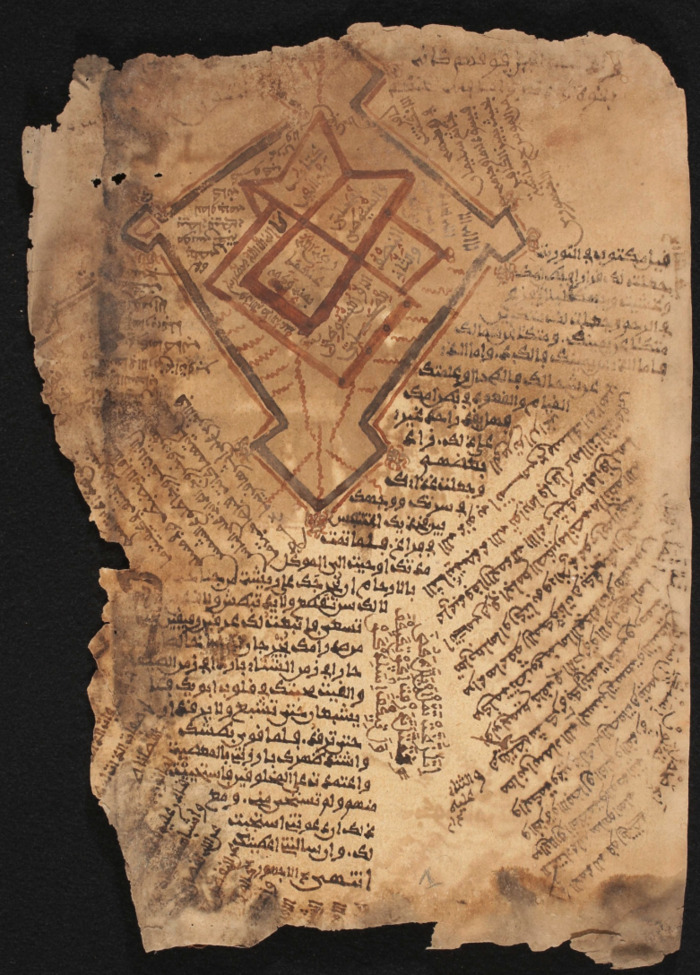

Mauro Nobili is a historian of pre-colonial and early colonial West Africa. His research examines the political and intellectual history of Muslim societies in the region from the late Middle Ages to the early colonial period, focusing specifically but not exclusively on modern-day Republic of Mali. He has worked in several archives of Arabic manuscripts in West Africa (Mauritania, Mali, Senegal, Nigeria, Ghana, and Côte d’Ivoire), in Europe (France and Denmark), and in the United States, as well as in colonial archives in Britain (Foreign Office – the National Archives) and Germany (Staatsbibliothek, Hamburg). His research has led to several publications that appeared in journals, including History in Africa and the Journal of African History, book chapters, two collections of essays that he has edited, and two monographs. As part of his research, Mauro has explored the history and paleography on West African script styles, focusing in particular on the Suqi and the Barnawi. Through the research on script styles, he is at providing scholars with tools to read West African manuscripts, as well as writing new histories of literacy in the region.
Mauro Nobili is the author of Sultan, Caliph, and Renewer of the Faith: Aḥmad Lobbo, the Tārīkh al-fattāsh and the Making of an Islamic State in West Africa (2020), translated into French as Sultan, calife et rénovateur de la foi: Aḥmad Lobbo, le Tārīkh al-fattāsh et la création d’un état islamique en Afrique de l’Ouest (2021). Most relevant publications include “Arabic Scripts in West African Manuscripts: A Tentative Classification from the de Gironcourt Manuscript Collection” published in Islamic Africa (2/1, 105-133) in 2011, and “Central Sudanic Arabic Scripts (Part 2): Barnāwī” co-authored with Andrea Brigaglia and published in Islamic Africa (Vol. 4, No. 2, 197-223) in 2013.